
As South Africa considers the future of agroecology, an important question needs greater attention: what role do cities and urban communities play in shaping a more sustainable, equitable and resilient food system?
Agroecology is often discussed through the lens of agricultural production, farming practices and rural livelihoods. While these are central to the movement, the transition towards more sustainable food systems also depends on what happens beyond the farm: how food moves through markets, how consumers access it, and whether the communities who need it most can afford it.
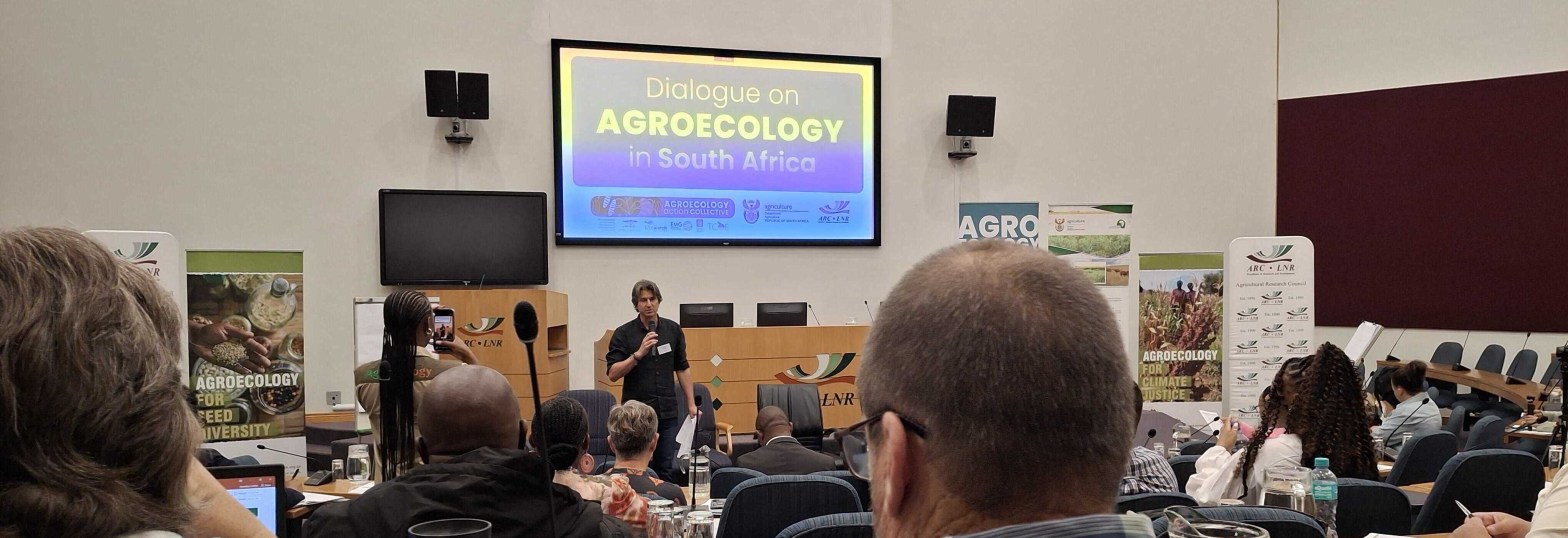
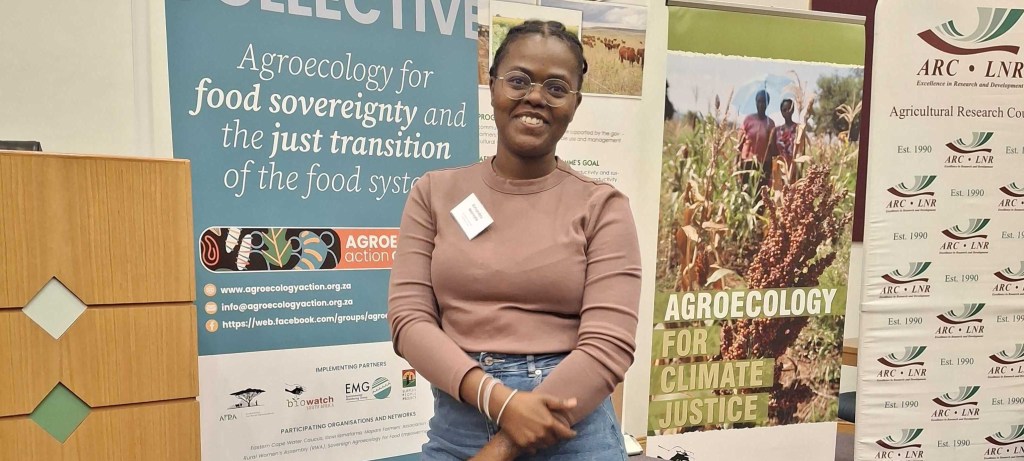
This was among the perspectives brought into the national conversation by Rirhandzu Marivate, Programmes Manager at the SA Urban Food & Farming Trust (SAUFFT), during the Dialogue on Agroecology in South Africa, held in Pretoria earlier in October.
Hosted by the Agroecology Action Collective in collaboration with the National Department of Agriculture and the Agricultural Research Council (ARC), the two-day dialogue brought together civil society organisations, government representatives, farmers, researchers, academics and other food systems actors. The gathering aimed to strengthen a shared understanding of agroecology, explore priorities for a national agroecology strategy and identify opportunities for collaboration.
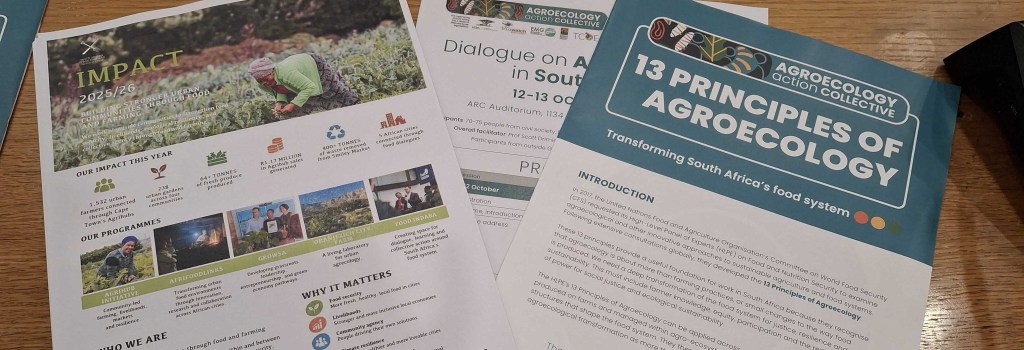
For SAUFFT, participation in this dialogue was an opportunity to bring an often overlooked dimension into the discussion: the relationship between agroecology, urban food systems and the everyday realities of food access.
Moving beyond production: Understanding the market ecosystem.
One central theme of the dialogue was the need to strengthen market access for agroecological products. Rirhandzu facilitated sessions on this topic, highlighting the conditions agroecological producers need to participate in viable and sustainable markets.
Market access is often understood simply as finding buyers for farmers’ produce. However, the reality is considerably more complex. It involves enabling policies, recognition of agroecological production, appropriate infrastructure, supportive supply chains, fair pricing, and markets accessible to both producers and consumers.
A recurring challenge for small-scale and agroecological farmers is that producing food sustainably does not automatically translate into reliable market opportunities or viable livelihoods. Without appropriate systems to connect producers to consumers, the economic potential of agroecological production remains limited.
This is where territorial markets become particularly important.
Territorial markets offer opportunities to strengthen local food economies by connecting producers, traders, food businesses and consumers within particular geographical areas. They can provide more direct relationships between producers and consumers while creating opportunities for locally produced food to enter different markets, including retail and institutional supply chains.
However, unlocking this potential requires more than individual market initiatives. It calls for a better understanding of existing market ecosystems and greater coordination between the different actors who make food systems function.
The discussions reinforced the importance of building supply chains that recognise the realities of agroecological producers while ensuring that the transition towards more sustainable production does not place an unfair financial burden on farmers or consumers.
Why urban food systems belong in the agroecology conversation
One key consideration emerging from the dialogue was the need to broaden how agroecology is understood in the South African context.
As the country continues to urbanise, food systems are increasingly shaped by the relationship between rural production and urban consumption. Yet urban communities and their food systems actors do not always feature prominently in conversations about agroecology.
This is a significant gap.
Urban communities are not simply the end point of food supply chains. They actively participate in food systems as growers, traders, food businesses, community organisations, households, and consumers who influence how food is produced, distributed, sold, and accessed.
For many urban households, food insecurity is not simply a question of whether food is available. It is also about affordability, physical access and the ability to obtain nutritious and culturally appropriate food.
This distinction matters when considering agroecology’s role in addressing food system inequalities.
Sustainable food production alone cannot guarantee food security if the resulting produce remains financially or physically inaccessible to the communities who need it. Similarly, the growth of agroecological production will depend partly on whether markets and consumers can support it.
The urban dimension therefore needs to be considered as part of the wider agroecological transition, rather than as a separate conversation.
Urban agriculture is part of the solution, but not the whole answer.
Urban agriculture provides an important entry point for connecting agroecology with the everyday experiences of urban communities.
Across Cape Town, community and household gardens improve food access, create opportunities for local economic activity, strengthen social connections, and provide spaces for environmental learning. They also allow communities to participate more directly in shaping their local food environments.
Through its Agrihub Initiative, SAUFFT works alongside small-scale urban farmers across Khayelitsha, Langa, Gugulethu and Mitchells Plain, supporting community-based growing initiatives and strengthening urban farmers’ role within the wider food system.
These initiatives demonstrate that food production in cities is about more than the quantity of food harvested. It is also about building knowledge, supporting livelihoods, strengthening relationships and creating more resilient communities.
However, urban agriculture cannot meet the food requirements of entire urban populations on its own.
Urban food sovereignty requires a broader approach that considers where food comes from, how it moves through markets, who controls its distribution and what households can afford. It also requires stronger connections between urban demand and agroecological production in rural and peri-urban areas.
This means recognising the interdependence between producers and consumers, and creating systems in which urban communities can actively support more sustainable forms of agriculture.
The challenge is therefore not only how to grow more food within cities, but how to build food systems that connect people to the food they need in ways that are socially, economically and environmentally sustainable.
Building the connections between producers and consumers
Bringing urban food systems into the agroecology conversation also raises important questions about how markets are organised and who they serve.
If agroecological food is to become a more accessible part of everyday urban life, attention must be given to the mechanisms that connect production with consumption.
Territorial markets, public procurement, local food enterprises and stronger producer–consumer relationships all offer opportunities to create more supportive market environments. Consumer awareness and accessible distribution channels can also help strengthen demand for agroecological products.
However, these interventions need to be considered alongside the realities of low-income households.
A transition to more sustainable food systems cannot succeed if the benefits are available only to consumers who can afford higher food prices. Equally, farmers cannot be expected to carry the costs of transitioning to agroecological practices without appropriate support, infrastructure and market opportunities.
This requires a more deliberate approach to sharing the costs and benefits of the transition across the food system.
It also calls for greater collaboration between government, civil society, research institutions, farmers, traders and private sector actors. Each has a role to play in creating the policies, infrastructure and market conditions needed to support agroecology at scale.
From shared understanding to collective action
The Dialogue on Agroecology in South Africa offered an important opportunity to reflect on progress in advancing agroecology and the work still needed to translate its principles into practice.
The growing recognition of agroecology within government, alongside years of advocacy and practical work by civil society and farming communities, provides an important foundation for developing a more coordinated national approach.
The conversations also highlighted the importance of moving beyond a narrow understanding of agroecology as a collection of farming techniques. It is an approach to food systems that recognises the relationships between people, nature, knowledge, livelihoods, markets and governance.
An effective national agroecology strategy will therefore need to account for the different contexts in which food systems operate. Rural farmers, urban growers, consumers, informal traders, researchers and policymakers each bring different experiences, knowledge and priorities to the process.
For urban food systems, this means ensuring that urban communities’ experiences are meaningfully reflected in national policy discussions and that the relationship between sustainable production and equitable food access receives greater attention.
Ultimately, the future of agroecology in South Africa will depend on how effectively these different dimensions are brought together.
The transition cannot be measured only by how sustainably food is produced, but also by how it reaches people, whether markets support those who grow it, and whether nutritious food is accessible to the communities who need it most.
As the national conversation continues, there is an opportunity to build a more inclusive understanding of agroecology, one that recognises cities not simply as destinations for food, but as essential spaces for advancing food sovereignty, strengthening local food economies and creating more resilient food systems.
A food system cannot be transformed by changing how food is grown alone. It also requires rethinking how food connects people, how markets create value, and how communities shape the systems that sustain them.

