
Researchers and partners from across Africa and Europe gathered in Lisbon for the ReCAPS Kick-off Meeting, sharing perspectives on how climate transitions can become more equitable, inclusive and responsive to the needs of local communities.
On 23 November 2026, partners in the Re-assessing Climate Policies for Equity and Justice through Societal Readiness (ReCAPS) project gathered in Lisbon, Portugal, for a research meeting bringing together researchers and institutions from across Africa and Europe.
The four-year, EU-funded Horizon Europe initiative explores how climate policies and transitions affect equity and justice at the local level, and what it takes for societies to be ready for and meaningfully participate in these transitions.
Among the case studies presented at the meeting was the Greater Cape Town Region, led by Rirhandzu Marivate of the South African Urban Food & Farming Trust (SAUFFT) and Gareth Haysom of the African Centre for Cities (ACC).
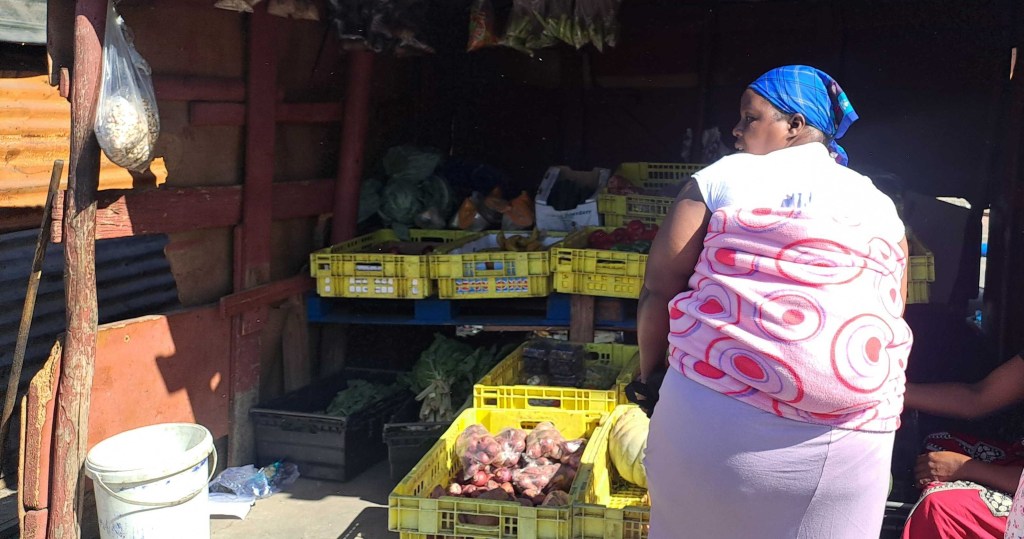
Understanding climate justice through Cape Town’s food systems
Cape Town presents a particularly important context for exploring the relationship between climate change, inequality and food systems. Despite being situated within one of South Africa’s most productive agricultural regions, the city continues to experience widespread food insecurity, shaped by poverty, high food prices, unequal access and historical spatial inequalities.
At the same time, the Greater Cape Town Region faces increasing climate-related pressures, including droughts, flooding, heatwaves, wildfires and coastal impacts.
The Cape Town case study will explore how these challenges intersect with questions of equity, justice and societal readiness across eight selected sites. These include community-based food initiatives, informal markets, civic organisations and private-sector actors.
The research will focus on four interconnected areas: food growing, food markets, community feeding, and food waste and circularity.
Through a participatory and phased approach, the research seeks to establish a locally grounded understanding of equity and justice, assess how these issues manifest across different food system initiatives, and identify pathways towards more equitable and societally ready climate futures.

