
This year’s World Food Day theme asks us to innovate today to nourish tomorrow. But in Cape Town’s townships, some of the most sophisticated food innovation is already here, being tested daily by farmers and foragers whose expertise food policy rarely takes seriously.
Expertise policy doesn’t recognise
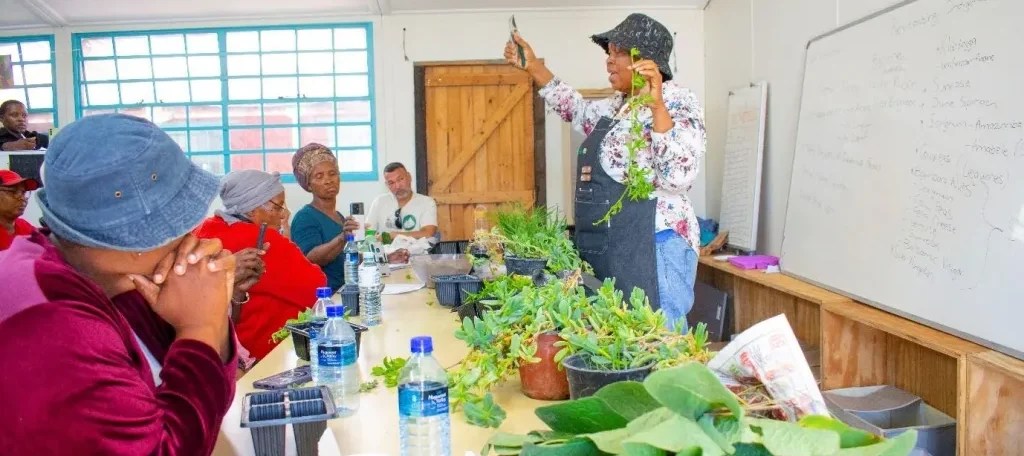
Food policy debates tend to default to a familiar cast of experts, including agronomists, nutritionists and technologists. Meanwhile, people facing food insecurity every day, and often developing practical ways of responding to it, can be treated as a cultural footnote rather than as a reliable source of knowledge. Our participatory research with twenty growers and foragers across three under-resourced Cape Town neighbourhoods tells a different story. In areas where public infrastructure is thin, these growers are developing informal systems of provisioning, health practices and mutual aid that help keep people fed, connected and resilient, systems that policy can easily overlook.
What this actually looks like
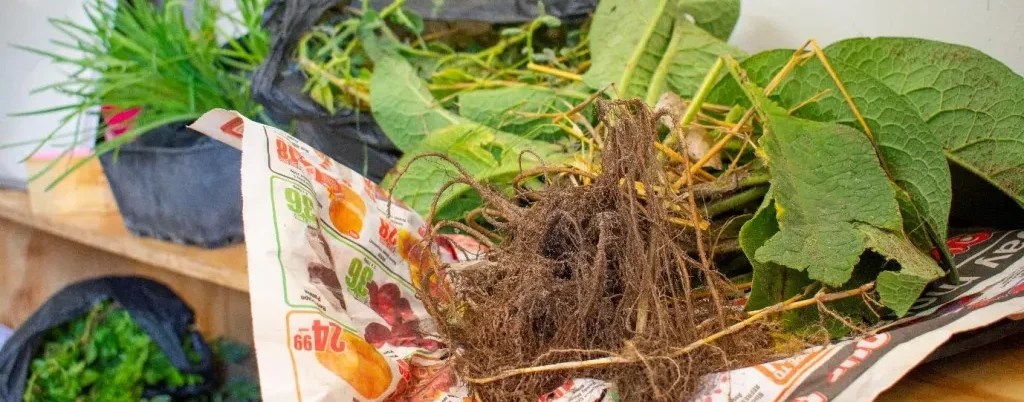
Seed saving is one of the clearest examples. Participants described building up their own seed stocks season after season, precisely to avoid buying seeds each year. As one grower put it, “I don’t buy much at the shops anymore because I use the same from the plant I used last year and it comes out and I use that seed to replant.” Multiplied across a household budget, small savings on seeds, herbs and vegetables can add up to something that matters when money is tight.
The line between food and medicine barely exists in these gardens. Participants described growing dune spinach for its nutritional value, including its iron and zinc content. Fig sap was also described as being applied to cuts because, as one participant told us, “it cures it.” One woman described using rosemary tea, basil and mint leaves at home after a dog bite, before later seeking care from a nurse. These accounts describe participants’ own practices and beliefs rather than clinical evidence of effectiveness. This is not necessarily a rejection of formal healthcare: participants moved between home remedies and clinics depending on what they trusted, what they experienced as effective, and what they could afford or access. Researchers often describe this movement between different forms of healthcare as medical pluralism.
And then there’s the mutual aid that kicks in when things go wrong. In one case, a community garden’s water tank was stolen. Rather than let the garden die, neighbours kept it alive by hand-carrying water together until the problem was fixed. That’s a practical response to infrastructure failure, built and maintained by community members themselves. As one participant put it, “That is how the garden still lives.” No agency stepped in. No insurance claim. Just neighbours showing up daily because the garden mattered to more than one household.
None of this is static “tradition.” Participants were constantly testing, adapting and comparing notes. One grower described checking online sources alongside what her grandmother taught her: “some old ways still work, some we improve.” This is knowledge being actively made, rather than simply preserved.
Why this should matter beyond Cape Town
It’s easy to file this under “interesting, but local.” We’d push back on that. Wherever resources are tight, this work asks an important question: if this expertise were properly recognised and resourced, what could it contribute? Too often, recognition can remain symbolic, such as a nod to “heritage”, rather than translating into material support in the form of secure land, reliable water and protection from theft. That gap matters because, where state and market provision is thin, this knowledge is not simply a nice-to-have. It is part of the infrastructure that enables communities to keep going. Policy frameworks that overlook it risk overlooking capacity that may be difficult to replace.
A collaboration, not a case study
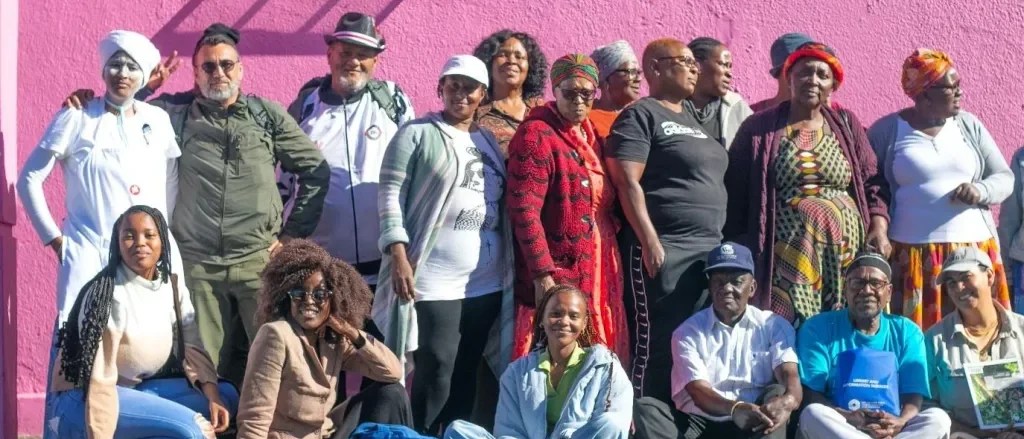
None of this came from watching from a distance. This research was built together with Abalimi Bezekhaya, the South African Urban Food and Farming Trust and the University of the Western Cape Department of Geography and Environmental Studies, alongside the farmers and foragers themselves, through participatory workshops, a shared recipe book and a community-authored Community of Practice that the growers have since taken and run with on their own terms.
That last part matters most to us. The clearest sign that this work has value isn’t simply anything we produced; it is the fact that participants went on to organise a follow-up workshop themselves, without being asked to. A WhatsApp network of twenty members now keeps the knowledge-sharing going between growing seasons, independently of the research team.
So innovate today, nourish tomorrow?
Maybe the more honest version of that theme, for Cape Town at least, is this: the innovation isn’t only ahead of us. Some of it has already been quietly running for years, in gardens most food-policy conversations never visit. If we’re serious about nourishing tomorrow, the first step might not be inventing something new. It might be listening more closely to the people who’ve been doing it all along.

