
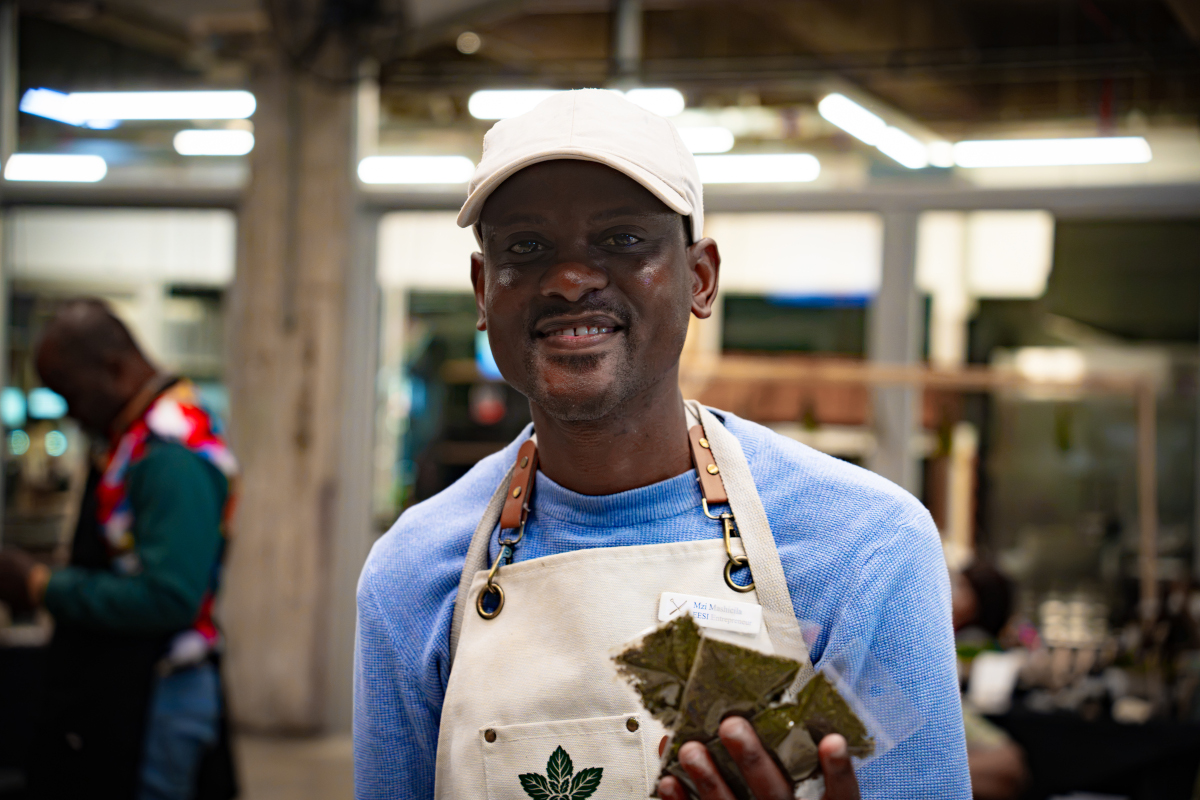
Enterprise and livelihoods have been part of the SA Urban Food & Farming Trust’s work since its earliest years, with award-winning achievements in this area.
Even though our work is centred on the food system – the people, relationships, places and institutions through which food is grown, made, traded, bought and eaten – many of the people who make that system work are also farmers, traders, food producers and entrepreneurs whose livelihoods depend on their ability to participate effectively in markets. The stronger and more resilient they are, the stronger and more resilient the food system becomes.
As a consequence, for more than a decade, we have worked in different ways to strengthen enterprise capabilities, improve trading environments, connect people to markets and resources, and create opportunities for learning and exchange.
Learning through markets
Some of our earliest experience came through the creation of the Oranjezicht City Farm Market in 2013.
During the five years in which the market was established and developed before being sold in December 2017, considerable work went into supporting the farmers, producers and food traders participating in it. This included working with individual traders while continually adapting the market itself: its mix of enterprises, standards, presentation, customer experience and operating environment. We built a farmer’s market from scratch to over 40 traders supporting over 200 livelihoods and a weekend attendance of more than 8,000 people weekly in just a few years.
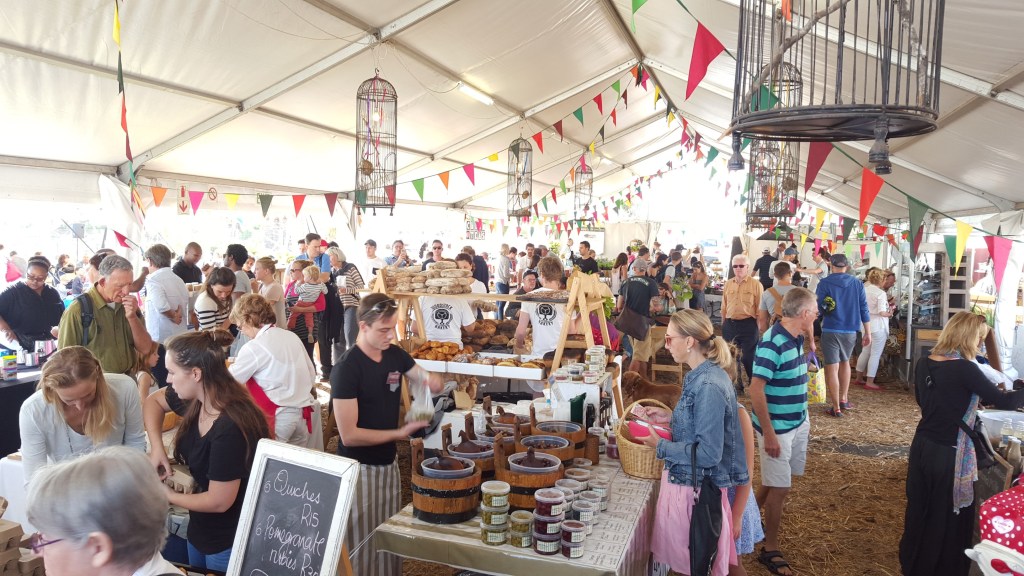
That experience produced an important lesson that has continued to influence SAUFFT’s work. Supporting an enterprise is not only about improving the capabilities of the entrepreneur. The environment in which that enterprise operates also matters: who it can meet, what infrastructure is available, what customers expect, what rules govern participation and whether useful relationships can form.
The market has developed considerably since those early years and is today an independently owned and highly successful Cape Town food market. SAUFFT nevertheless retains substantial institutional knowledge from the formative period in which the platform was created. We know what it takes, and how to create opportunities for success.
Developing people and enterprises
That experience was followed by more structured work supporting people building livelihoods within the food and green economies.
Through GrowSA, SAUFFT has worked with partners to provide training, education, mentoring and practical support to people working in gardens, kitchens, hubs and markets. GrowSA has supported successive cohorts of people developing their capabilities and projects within South Africa’s grassroots green economy.
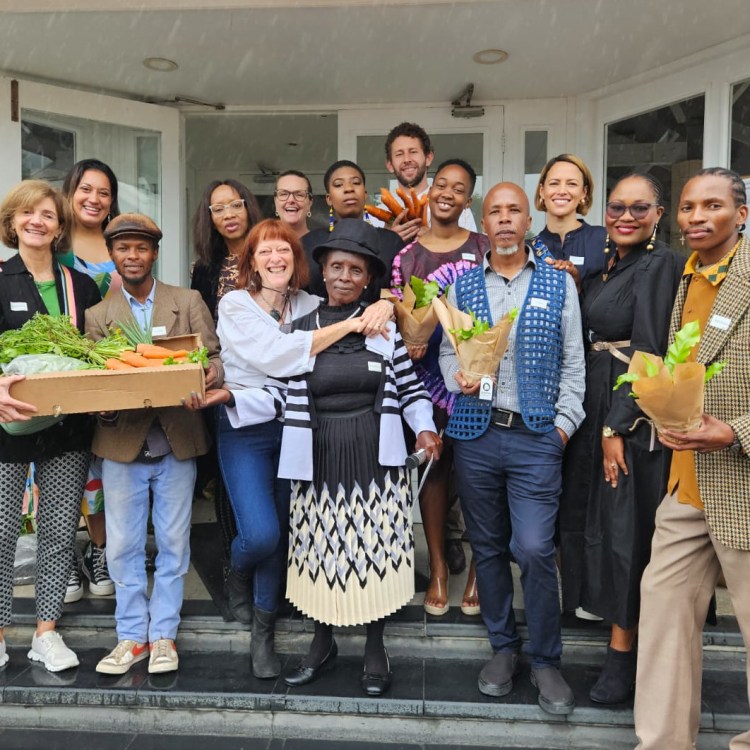
SAUFFT personnel have also had a longstanding relationship with Oribi’s work supporting food entrepreneurs. SAUFFT’s CEO has mentored entrepreneurs since Oribi’s first cohort, and both the CEO and SAUFFT’s Programmes Manager have subsequently mentored participants and delivered masterclasses to Oribi cohorts since then.
Other initiatives, including the Environmental Entrepreneur Support Initiative, have extended this work into the development of leadership, agency and practical capability among people working for change within food systems and environmental sustainability.
Enterprise development within AfriFOODlinks
Since 2022, this strand of work has deepened through AfriFOODlinks, a multi-city African and European programme working to create more sustainable and inclusive urban food systems.
SAUFFT’s contribution has included work with Oribi around the development of food-system enterprises, particularly enterprises led by women and young people, as well as work exploring more appropriate financing for small, informal and socially oriented food businesses.
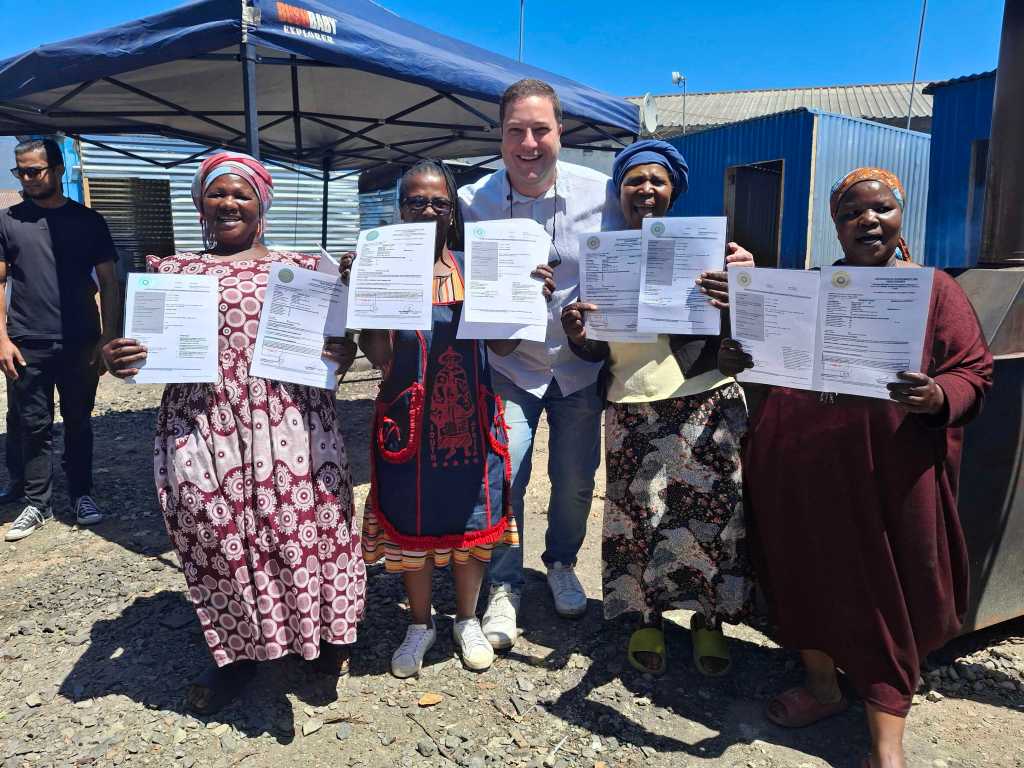
At the same time, our work in Cape Town’s informal food environments has reinforced the importance of starting with the realities businesses actually face. In Langa and Bellville, SAUFFT and its partners have worked directly with informal market traders on practical constraints to their businesses. This has included financial-management skills, food-safety and regulatory requirements, and support in securing Certificates of Acceptability and business licences to become fully compliant to trade.
Some of these barriers may appear administrative from outside the business. For a trader, however, they can determine where and how a business is able to operate, the markets it can access and its ability to develop.
The work has therefore combined support to individual traders with changes to the wider market environment. In Langa, for example, work with traders, the City of Cape Town and Ranyaka Community Transformation has included improvements to the physical conditions of the historic Smiley Market.
Testing another kind of market opportunity
In 2026, Food Indaba provided another opportunity to test how an enabling environment could support emerging food enterprises.
MRKTPLC brought together 14 local agri-food processing businesses, the majority women- and youth-owned. Participation was free, with enterprises provided with dedicated presentation space alongside opportunities to pitch their businesses, tell their stories and meet buyers, chefs, media and other participants in Cape Town’s food system.
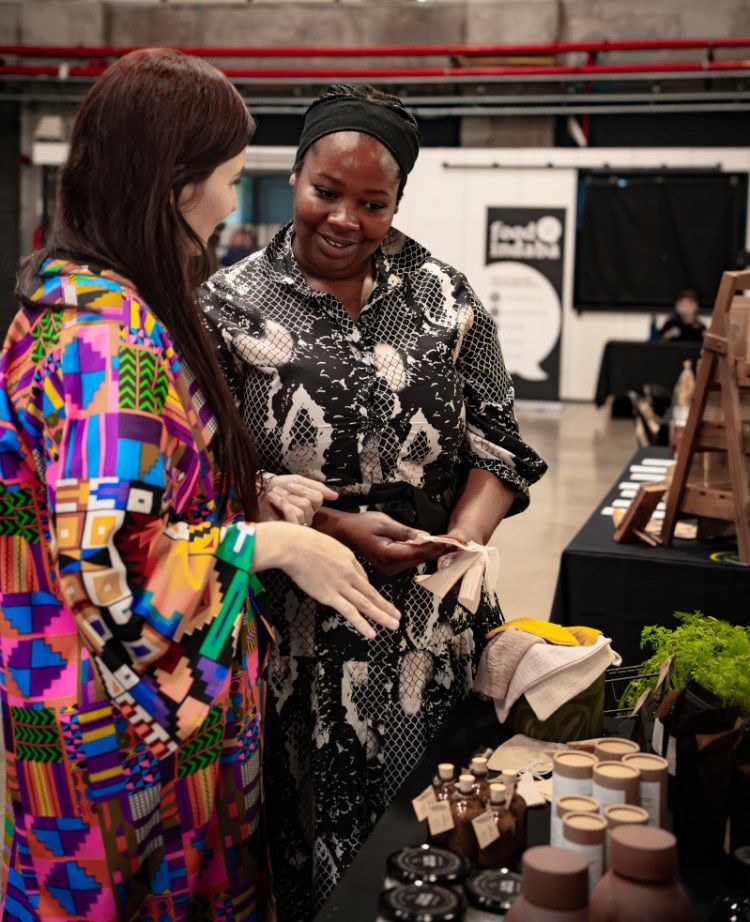
The experience also produced useful learning. Direct retail trading was weaker than anticipated, while the Spotlight Stage, networking, business-to-business connections and recorded enterprise stories proved more valuable.
Rather than treating this as a reason simply to attract more customers to another market, the learning points towards a different approach: prepare enterprises more deliberately before they enter a market-engagement environment, use the event to practise and apply those capabilities and build relationships, and then continue supporting relevant opportunities afterwards.
Continuing the work
This enterprise and livelihoods strand continues to develop. KitchenWorks, launched in Langa in 2026, is exploring community-owned agro-processing with farmers and informal food traders, including skills development, mentoring, product development, branding and routes to market.
Across these initiatives, the form of the work changes because the needs and circumstances are different. A farmer, an informal market trader, an early-stage food manufacturer and a community-owned processing enterprise do not need the same intervention. What connects the work is a growing understanding that enterprise capability and the environment around an enterprise need to develop together.
Training can matter. So can mentoring, finance, licences, infrastructure, presentation, market intelligence and business skills. But relationships and access matter too: relationships with customers, buyers, peers, institutions, government and others who can help an enterprise move forward.
For SAUFFT, supporting enterprise and livelihoods within the food system therefore means working on both sides of that relationship: strengthening the capacity of people and enterprises to act, while helping create environments in which that capacity has a better chance of becoming practical opportunity.

