
As cities around the world grapple with climate change, waste management, mobility, and food insecurity, international collaborations are becoming increasingly important in shaping more sustainable urban futures.
Earlier this month, SAUFFT’s Programmes Manager, Rirhandzu Marivate, travelled to Bavaria, Germany, as part of a knowledge-exchange and capacity-building mission focused on sustainable urban mobility, circular systems, and food system resilience.
Rirhandzu recently joined an Advisory Board convened by the Greater Stellenbosch Trust, supported by Deutsche Gesellschaft für Internationale Zusammenarbeit (GIZ), which focuses on developing sustainable business models for e-cargo bicycles in South African urban areas. The initiative explores how e-mobility, supported by renewable energy charging infrastructure, can strengthen urban systems while creating scalable, sustainable models for local implementation. The board provides strategic guidance to six pilot projects in Stellenbosch, including the Langa Waste Diversion pilot implemented through AfriFOODLinks.
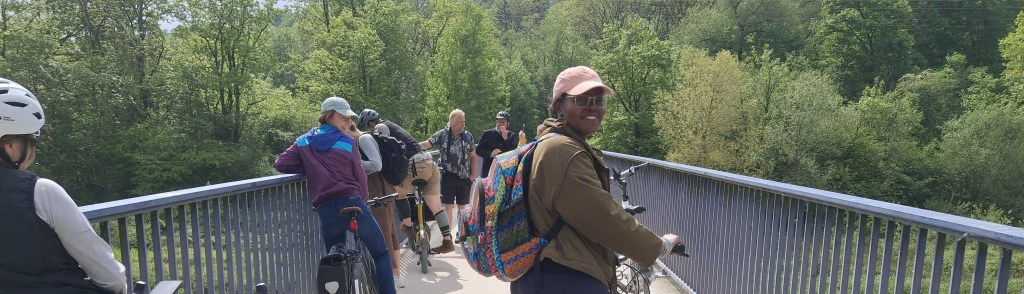
As part of this work, Rirhandzu was invited by GIZ to participate in a learning exchange in Bavaria, organised in partnership with Innovationsmanufaktur, ADFC Bayern, and the State of Bavaria. The programme created opportunities to engage with public institutions, sustainability practitioners, municipalities, cooperatives, and innovators working at the intersection of mobility, waste, food systems, and circular economies.
The visit began in Munich, where delegates convened at the Munich Innovation Hub to align on the purpose of the exchange and explore how e-cargo mobility systems are being implemented in both Germany and South Africa. A key site visit included Munich’s municipal cargo bike logistics hub, an ambitious city-supported initiative designed to reduce congestion while strengthening sustainable transport infrastructure through shared logistics spaces, repair facilities, and public-private partnerships.
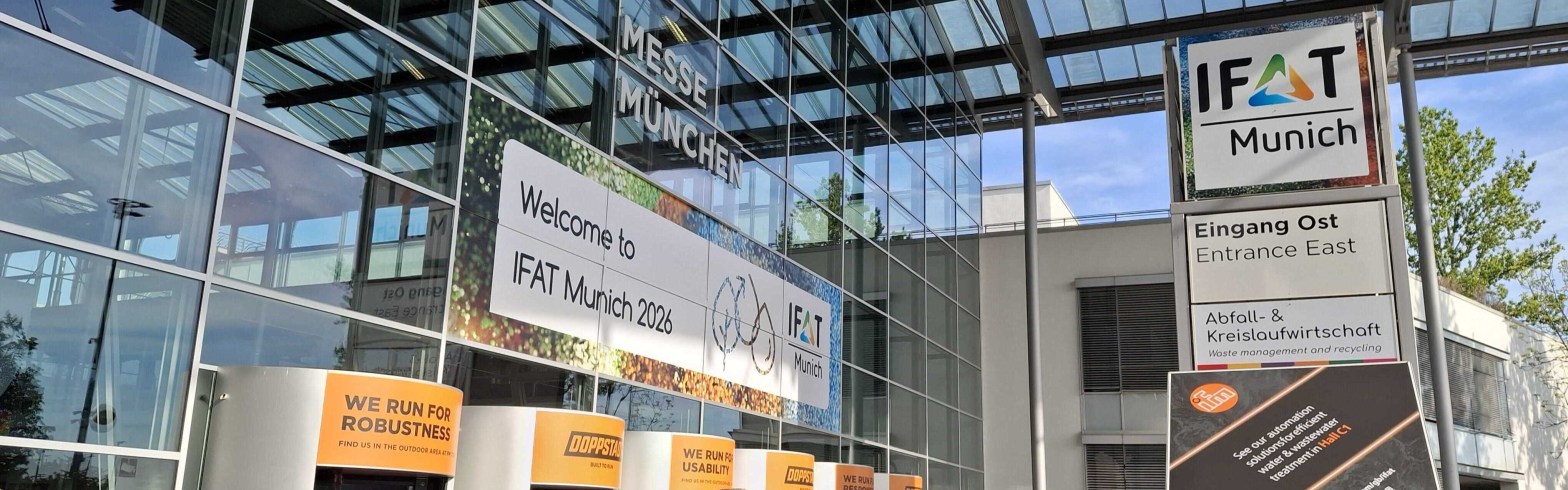
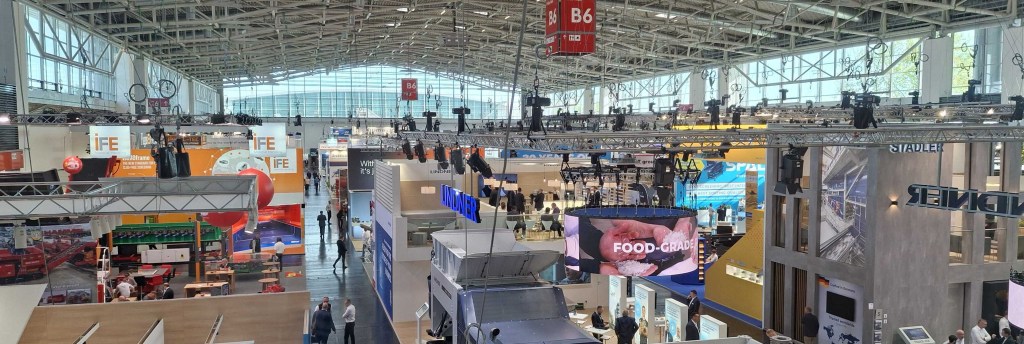
Rirhandzu also attended the IFAT Munich conference, one of the world’s leading platforms for environmental technologies, where discussions focused on water systems, waste management, and sustainable urban infrastructure. Through engagements with sustainability leaders, provincial government officials (including the Western Cape Government), and the Water Hub partnership between the University of Cape Town and the Technical University of Munich, the visit highlighted the importance of long-term planning, innovation, and cross-sector collaboration in building resilient systems.
Beyond mobility and infrastructure, the programme explored alternative models of food production and ownership. During a visit to Kartoffelkombinat, a successful agricultural cooperative supplying organic produce to over 2,300 households, Rirhandzu gained insight into a solidarity-based food model where community members collectively sustain local food production through a subscription system. The experience raised important reflections on whether similar community-supported agriculture approaches could strengthen food sovereignty and improve local food access in South African communities.
In Augsburg, a city internationally recognised for its pioneering water management systems, the delegation explored large-scale circular economy models that transform waste into resources. A visit to AVA Biowaste Recycling demonstrated how organic waste can be converted into compost, industrial carbon dioxide, and bioenergy that powers thousands of households, offering a compelling example of how waste systems can become regenerative rather than extractive. For SAUFFT, these learnings spark important questions around how circular approaches to food waste and organic resource management could be translated into marginalised communities in South Africa.
The programme also included engagements with Hub4Africa, a vocational training initiative equipping African participants with technical skills aligned to German standards, and visits to historic examples of socially driven urban planning, including Augsburg’s centuries-old social housing model, the Fuggerei.
Importantly, this experience reinforces the role that South African practitioners and organisations can play in shaping global conversations on sustainability, mobility, and food systems transformation. Through this exchange, Rirhandzu is not only bringing back practical insights on e-cargo mobility and circular systems, but also exploring how these lessons can strengthen route-to-market access for SAUFFT’s Agrihubs, beginning with the Langa Agrihub as it pilots e-cargo bicycles for organic waste diversion.
As Africa continues to navigate complex urban food and climate challenges, international exchanges such as these provide important opportunities to strengthen partnerships, share ideas, and adapt innovative models to local realities. We are proud to see SAUFFT represented in these global sustainability conversations and look forward to the learnings, collaborations, and possibilities that emerge from this engagement.

