
For decades, the Rhodes Street Smiley Market in Langa has been a cornerstone of local food culture. Known for the preparation and sale of “smileys”, sheep heads cooked over open flames, the market is both an economic lifeline for women traders and a gathering place for residents and visitors. Despite its vibrancy, the site had long suffered from unsafe and unhygienic conditions.
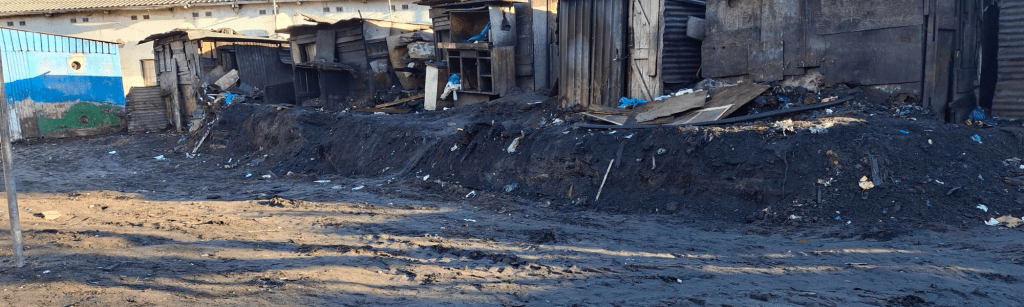
Traders worked on ground made up of compacted ash, rubble, and accumulated waste. Uneven surfaces, pooling water in the rainy season, and dust in dry weather made standing and working difficult, while waste build-up created sanitation challenges and contributed to health risks.

For traders like Nonkanyiso Krele, who has sold smileys in Langa since 1991, these conditions made daily work physically taxing and uncomfortable. Decades of accumulated waste and a deteriorating ground surface made an already demanding job even harder.
Recognising the urgent need for improvement, the AfriFOODlinks project, together with the City of Cape Town, the SA Urban Food & Farming Trust, Ranyaka Community Transformation, and the traders, prioritised clearing and levelling the site as the foundational step in transforming the market.
“Clearing the market allowed us to remove hazardous waste, tackle pests, and create a clean, level space. This not only improves health and safety for traders and the community but also lays the groundwork for future improvements like storage, cooking ovens, a waste depot, and shade, ensuring a dignified environment for everyone who uses the market daily,” said Rirhandzu Marivate, Programmes Manager at SAUFFT.

Clearing the Ground for Change
The upgrade began with the removal of years of ash, debris, and waste, creating a cleaner and safer space for traders and customers. The ground was levelled to eliminate uneven surfaces and pooling water. A durable concrete surface was installed to improve hygiene, simplify cleaning, and ensure long-term durability.
Traders were actively involved in planning and execution, ensuring the improvements reflected the realities of daily work at the market.
According to Rirhandzu, removing the waste was an intense and challenging process that lasted almost six weeks.
“We initially underestimated the volume, expecting 30 tonnes, but ultimately cleared around 400 tonnes. Working through winter rains made it even more difficult. We tried to preserve the traders’ makeshift structures, but many had become so embedded in the waste that they lost their integrity and had to be removed for safety,” she stated.
Preventing Re-accumulation: The BioBin Waste-Diversion Pilot
To prevent future waste build-up, the clearing and paving were paired with an on-site Waste Depot that collects ash, organic/meat waste, recyclables, and general waste as part of the AfriFOODlinks Smiley Market Waste Diversion Pilot, led by WasteED.
The organic waste is collected and sent to a BioBin machine located down the road at the Langa Agrihub. The BioBin processes organic waste generated at the market, diverting food scraps from informal dumping and landfill. By turning organic material into compost or soil amendment, it closes the loop between market waste and nearby food-growing spaces. Ash is also sent to the Agrihub, where it can be used to improve the soil. Meanwhile, recyclables are collected by a local recycler, and general waste is collected by the City of Cape Town.

For Nonkanyiso and the other traders, this waste system means the market stays clean and manageable, reducing the daily burden of waste and ensuring the newly upgraded surface remains safe, sanitary, and efficient for their work.
A Foundation for Dignified Work
The clearing and levelling of the Smiley Market is more than a physical upgrade; it restores dignity, safety, and efficiency for Nonkanyiso and her fellow traders. A level, stable, and hygienic surface reduces health risks, supports more efficient operations, and lays the foundation for further improvements.

By tackling long-standing infrastructure and sanitation challenges through community-centred design, the project demonstrates how practical, targeted interventions can create lasting change. With the new paving and waste depot in place, the Smiley Market stands as a powerful example of what is possible when transformation begins from the ground up.
 SA Urban Food & Farming Trust